
Case study | Mining & bulk fuel handling
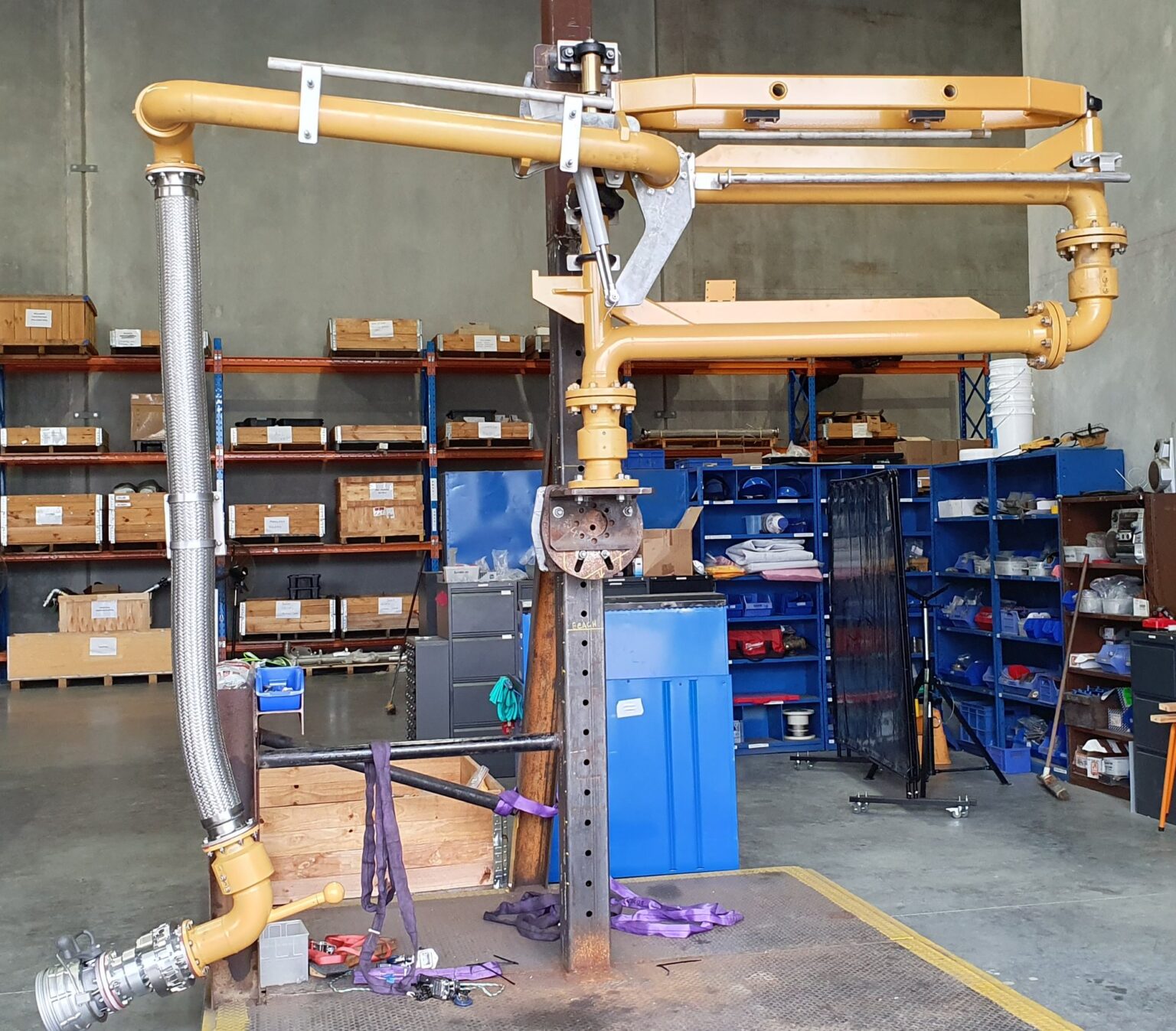
When impact damage took a DN100 rail loading arm out of service at a remote mine site, the operator needed it replaced as a priority — and Treloar, which had supplied the original, used the opportunity to improve the design rather than simply reproduce it.
At a glance
| Customer | An Australian supplier of bulk fuel handling systems, acting for a Tier 1 Australian mining operator. |
|---|---|
| The problem | A DN100 rail loading arm, originally supplied by Treloar, was damaged in service. Replacement was treated as a priority and the customer’s own installation programme had already been rescheduled. |
| The solution | A new DN100 arm incorporating Treloar’s current-generation swivel joints and an emergency breakaway coupling, specified in response to how the original arm was damaged. |
| The result | Hydrostatically tested, trial-assembled and factory acceptance tested before despatch. The arm remains in service, with the operator returning to Treloar for specification detail and replacement components. |
The challenge
Treloar had supplied the original loading arm for the facility some years earlier. When the customer first approached Treloar for a replacement arm and drop hose, the answer was not a part number. Treloar’s response was that the documented design was no longer the latest — the design had evolved during the original project — and asked for photographs and the arm number so the correct configuration could be identified.
That exchange matters, because it is the difference between a supplier who holds the history of the equipment and one who does not. The drawing on file was not what was standing on site.
Some years later the customer returned under very different circumstances. The existing arm had been damaged. Photographs were sent from the scene, and alongside the request for a replacement came a specific question: did Treloar know of a breakaway system that could be implemented to prevent a repeat? The operator regarded replacement as a priority, and the customer was under pressure because installation for its own end client had already been rescheduled.
The solution
Treloar’s offer did not simply reproduce the damaged arm. Two engineering changes were recommended:
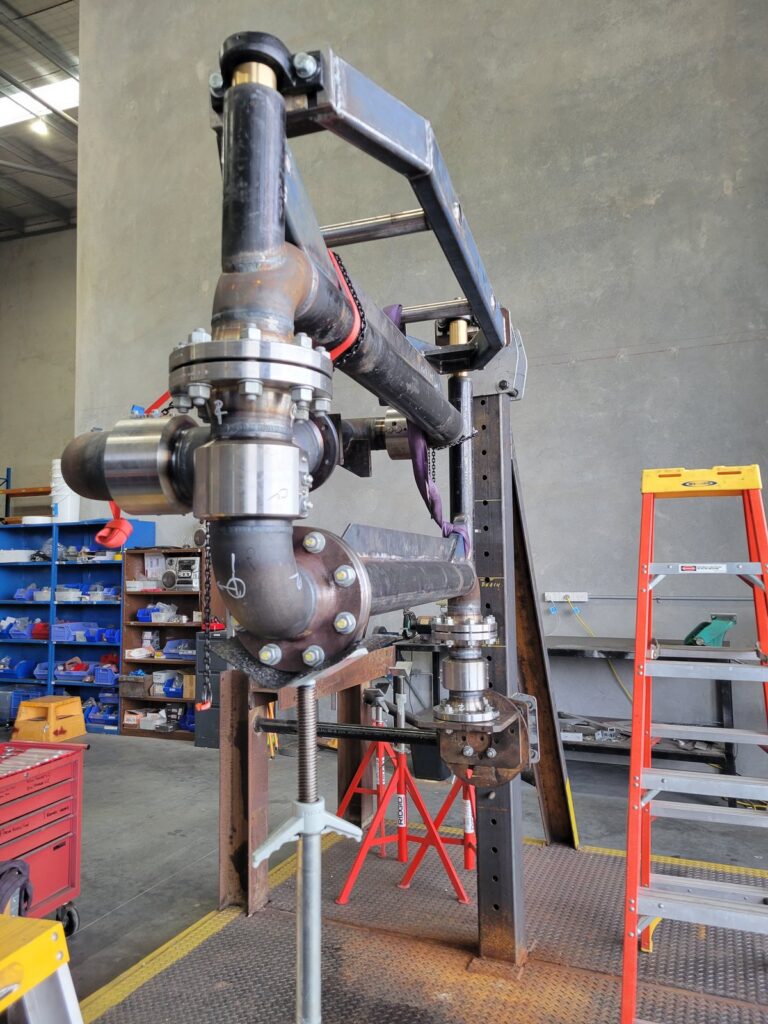
Current-generation swivel joints
The swivel joints in the original arm had been superseded by a later Treloar design. Treloar’s Engineering Manager recommended the newer version as a significant improvement, and it was incorporated in the replacement.
An emergency breakaway
The breakaway was specified for one reason: to limit the consequences of another impact of the same kind. It was also an arrangement the operator already had in service at other sites, which made it straightforward to adopt and to maintain within existing practice — a point Treloar raised deliberately when making the recommendation.
The arm was assembled, tested and documented at Treloar’s Rutherford workshop.
Proving it
With the customer’s installation programme already rescheduled, visibility mattered as much as speed. Treloar reported progress at each stage of manufacture — hydrostatic testing, trial assembly, painting, final assembly and factory acceptance test — including a painting delay caused by wet weather, raised as it happened rather than absorbed quietly.
The factory acceptance test was completed and the arm released for collection within days, supplied with the as-built drawing and FAT documentation, and the manufacturer’s data report to follow. Packed weight was approximately 700 kg.
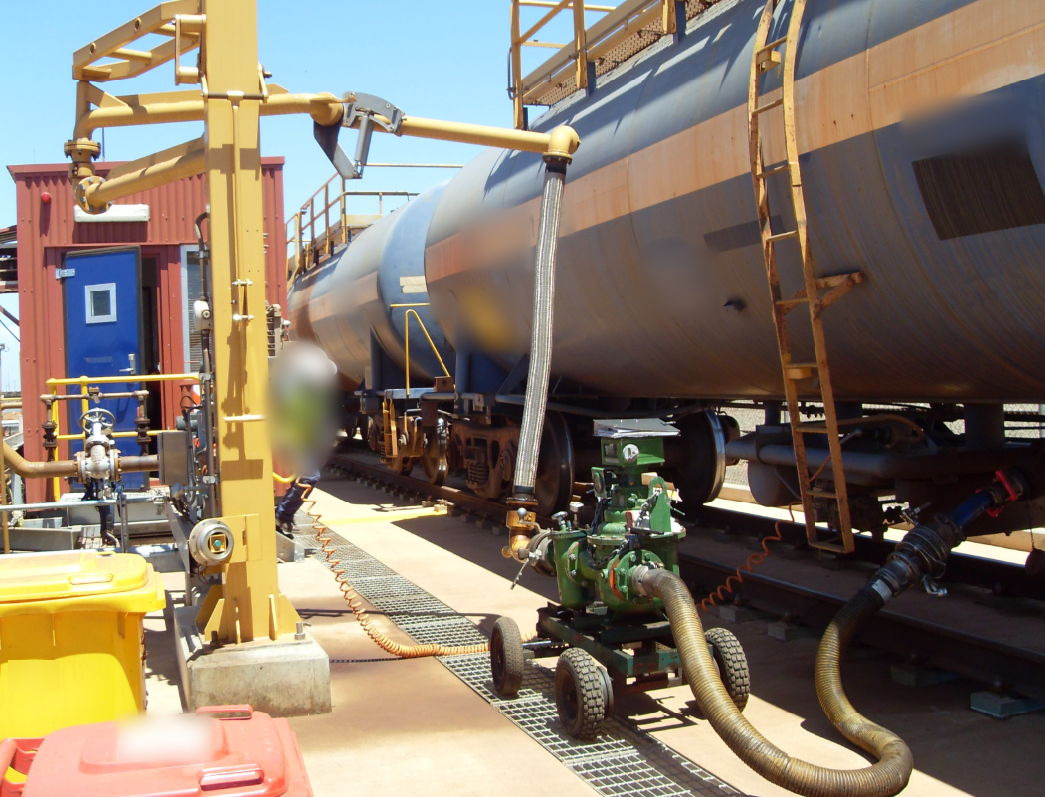
After delivery the operator asked Treloar for the breakaway specification so the item could be added to its own catalogue, then asked a more practical question: what would be needed if the breakaway actually activated? Treloar advised that the threaded rods and grub screws supplied with the arm are used to reconnect the two halves, that no other components are required to reconnect it, and recommended replacement of the seals and O-rings at twelve to twenty-four month intervals depending on duty.
About a year later the customer came back again — this time for an API coupler and two hydraulic struts for the same arm, quoting Treloar’s own operation and maintenance document. The arm was in service and the relationship was still the first place the customer went.
Why it matters
- Treloar holds the history of its own equipment. When the replacement was needed, Treloar knew the documented design had been superseded during the original project and worked from the arm as built, not the drawing on file.
- A replacement is an opportunity to improve, not just to duplicate. The newer swivel joints and the emergency breakaway were offered in direct response to how the arm had been damaged.
- Engineering judgement includes what the operator already runs. The breakaway specified was an arrangement already in use at the operator’s other sites, not a new item to introduce and support.
- Support continues after despatch. Reconnection procedure, seal replacement intervals and replacement components all came from the same people who built the arm.
Key facts
| Equipment | DN100 rail loading arm — replacement for a Treloar-supplied original |
|---|---|
| Key upgrades | Current-generation swivel joints; emergency breakaway coupling |
| Testing before despatch | Hydrostatic test, trial assembly, factory acceptance test |
| Documentation supplied | As-built drawing, FAT records, manufacturer’s data report |
| Recommended seal service | Seals and O-rings at 12–24 month intervals, depending on duty |
| Packed weight | Approximately 700 kg |
Bespoke loading systems for hazardous products. Engineered in Australia. Supported by the people who built them.
Treloar Trading P/L | 02 4937 6410 | treloar.com.au